Summary
South African businessman Errol Gregor, who is behind plans to build an oil pipeline from Mozambique to landlocked Zimbabwe, was previously involved in a $45 million fraud scandal in Ghana, according to financial records and admissions from the middleman who helped move the money. Gregor’s actions raise questions as to whether he is the right person to lead a large infrastructure project.
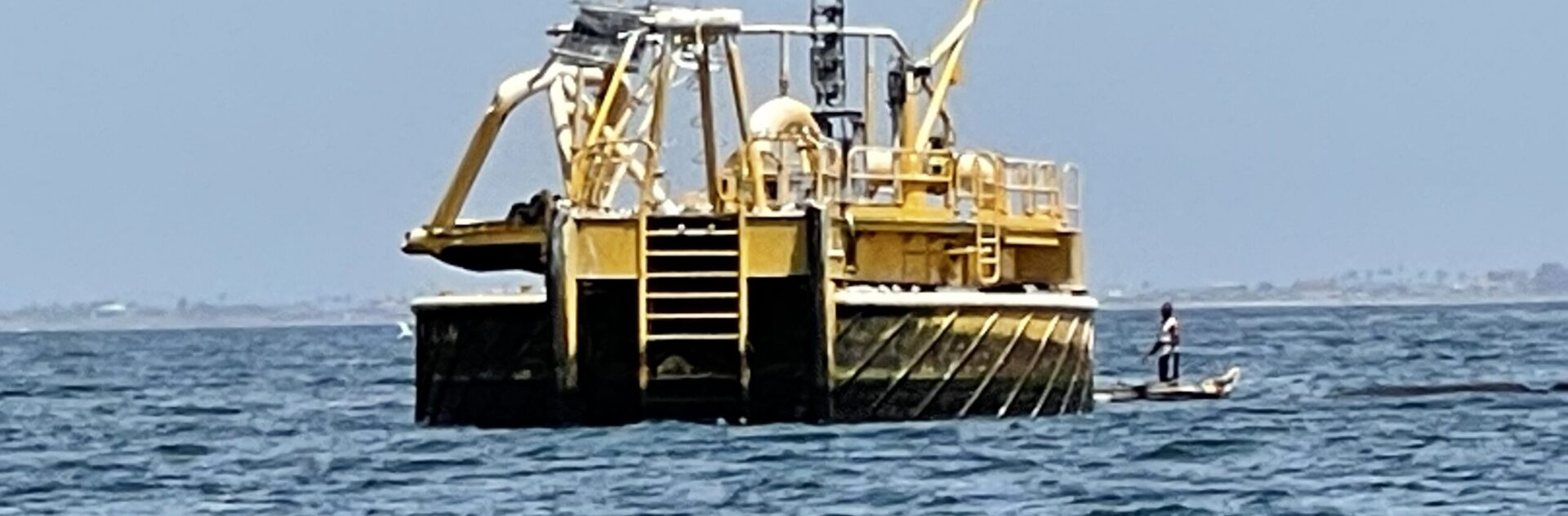
In 2016, Gregor led South African firm Mining Oil and Gas Services (MOGS) in its attempt to win control of a valuable offshore oil platform near Accra. During the tendering process, he authorized payments totaling $18 million from MOGS to a firm controlled by Edwin Obiri, a Ghanaian deal broker.Obiri claims that he funneled the cash—at the request of Gregor and the political appointee who awarded the contract—to a range of unrelated third parties. Some of the funds reached the political appointee, according to Obiri, and some reached firms controlled by a recent candidate to lead Ghana’s main opposition party, the National Democratic Congress (NDC). Obiri also received shares worth $27 million as part of the deal, according to Obiri himself and The Sentry’s review of financial records.
During the tendering process, MOGS’ purchase of a controlling stake in the company that managed the facility, Ghana Petroleum Mooring Systems (GPMS), raised red flags for possible corruption and fraud. The payments and share transfers to Obiri so alarmed MOGS’ auditors that they queried whether the transactions breached bribery laws.After Gregor left MOGS in 2019, the company sued both him and Obiri and referred the matter to the South African police, whose investigation is still ongoing, according to MOGS. MOGS claims that it was the victim of a fraudulent scheme that resulted in payments being made without “any legitimate commercial rationale for the payments.” Obiri and Gregor deny wrongdoing.
South African pensioners and British banks may have inadvertently fueled the money machine. MOGS is part-owned by the Public Investment Corporation (PIC), the asset manager for government employees’ pension contributions. Furthermore, British-based Standard Chartered bank lent $50 million for the GPMS transaction.
Gregor has since moved on, and his new South African company, Coven Energy, plans to build a multibillion-dollar oil pipeline between the port of Beira, Mozambique, and Harare, Zimbabwe.The rationale, proponents say, is to meet the growing demand for fuel from the mining sector in Zimbabwe, Zambia, Botswana, and the Katanga province in southern Congo while positioning Harare as a regional distribution hub. Advocates claim that a second pipeline would create competition with the existing pipeline and the fuel trucking industry and create greater capacity to import fuel for onward distribution to neighboring states. Plans are progressing: insiders claim Coven is close to forming a joint venture with Zimbabwe’s National Oil Infrastructure Company (NOIC), while Harare and Maputo plan to jointly assess the feasibility of the proposed multibillion-dollar project.
Investigation
The money for GPMS came from South African pensioners and taxpayers and the UK’s Standard Chartered bank.Accordingly, law enforcement agencies in the three relevant jurisdictions—the UK, Ghana, and South Africa—should investigate the purchase of GPMS by MOGS, focusing on identifying the recipients of funds paid by Obiri during the process, in particular to find out whether those receiving monies were doing so on behalf of public officials, meaning that the payments had therefore potentially breached anti-bribery laws.
Probity
The government of Zimbabwe should consider a “fit and proper person” test for companies involved in key infrastructure projects, analogous to requirements in the banking sector. As part of the application or renewal process for an investment license, the Zimbabwe Investment and Development Agency could assess the probity of any individual with civil judgments against them, previous criminal convictions, and/or significant adverse media.
Openness and transparency
The government of Zimbabwe should upgrade existing procurement law by embracing open contracting standards. This would make procurement subject to open, competitive tenders, with all documents available to the public by default. Tendering documents, values (including line items), information on bidders (including beneficial ownership details), draft and signed contracts (along with annexes and sub-contracting information), payments, extensions, and amendments should be published on one central portal. The government of Zimbabwe should follow the example of other states by making contracts invalid unless published, creating an incentive for companies and procuring entities to desire publication.
The governments of Mozambique and Zimbabwe should commission an independent, impartial study examining whether a second pipeline makes economic sense. The results should be published.
Financial institutions should conduct enhanced customer due diligence on transactions involving Errol Gregor, Kingsley Kwame Awuah Darko, and Edwin Obiri, as well as any legal entities linked to them.
Souce Material
Court Documents
In the Matter Between MOGS (Pt) and MOGS International (Pty) Ltd and Errol George Gregor, Edwin Yaw Agyei Obiri, and Africore Energy Limited, High Court of South Africa, Gauteng Local Division, Johannesburg, 2021:
Founding Affidavit
https://www.documentcloud.org/documents/25227963-founding-affidavit
Combined Summons and Particulars of Claim
https://www.documentcloud.org/documents/25227959-combined-summons-and-particulars-of-claim
Court order
https://www.documentcloud.org/documents/25227960-court-order
Attachment of shares
https://www.documentcloud.org/documents/25227958-attachment-of-shares
Other material
Affidavit of Edwin Yaw Agyei Obiri
https://www.documentcloud.org/documents/25227962-edwin-obiri-affidavit
Email from Edwin Obiri to Albertinah Kekana, Chairperson of MOGS
https://www.documentcloud.org/documents/25227965-obiri-email-to-albertinah
Responses
Royal Bafokeng Holdings
https://www.documentcloud.org/documents/25227967-rbh-media-request-for-comment
Public Investment Corporation
https://www.documentcloud.org/documents/25227966-pic-media-request-for-comment
MOGS
https://www.documentcloud.org/documents/25227964-mogs-response-to-sentry-29-august-2024
Edwin Obiri
https://www.documentcloud.org/documents/25227961-edwin-obiri-media-request-for-comment